Hip Thrust
Hip Thrust demonstration
Performing the: A Step-by-Step Tutorial Hip Thrust
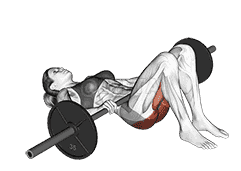
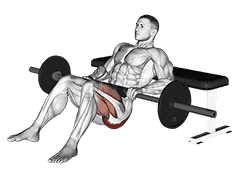
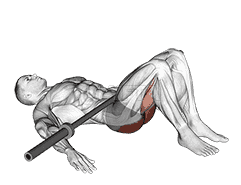
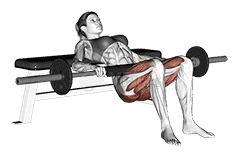
- Place a barbell or weight across your hips, holding it in place with your hands.
- Push through your heels to lift your hips towards the ceiling, ensuring that your body forms a straight line from your shoulders to your knees at the top of the movement.
- Hold this position for a moment, then slowly lower your hips back down to the starting position.
- Repeat this movement for the desired number of repetitions, ensuring that you keep your core engaged throughout the exercise to protect your lower back.
Tips for Performing Hip Thrust
- **Controlled Movement**: When performing the hip thrust, it's important to maintain a controlled movement. Avoid the common mistake of using momentum to lift your hips. Instead, engage your glutes and core to lift your hips, and lower them back down in a slow, controlled manner. This will help target the right muscles and prevent injury.
- **Keep Your Chin Tucked and Spine Neutral**: To protect your neck and spine, keep your chin tucked towards your chest and maintain a neutral spine throughout the exercise. A common mistake is to look up or extend the neck, which can lead
Can beginners do the Hip Thrust?
Yes, beginners can absolutely do the Hip Thrust exercise. It's a great exercise for targeting the glutes and hamstrings. However, it's important to start with a weight that is comfortable and manageable, and to focus on form and technique to avoid injury. It may be beneficial to start doing the exercise without any weight (bodyweight hip thrusts) to get used to the movement. As with any exercise, gradually increase the weight as strength and comfort with the exercise improves. It might also be helpful to have a personal trainer or fitness professional demonstrate the exercise first to ensure correct form.
What are common variations of the Hip Thrust?
- Glute Bridge: Similar to the hip thrust, the glute bridge is performed on the floor instead of an elevated surface.
- Barbell Hip Thrust: This variation includes adding a barbell across your hips for added resistance, helping to further strengthen your glutes.
- Banded Hip Thrust: In this variation, a resistance band is placed around the thighs to add extra tension and challenge to the hip thrust.
- Swiss Ball Hip Thrust: This variation involves using a Swiss ball under your shoulders, which can help to increase core stability and balance.