Dumbbell Seated Front Raise
Dumbbell Seated Front Raise demonstration
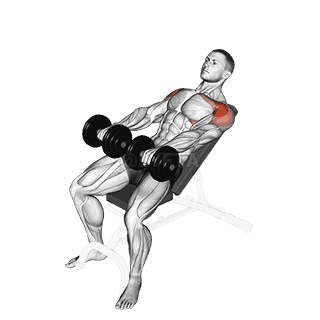
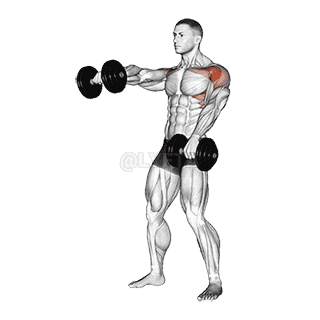
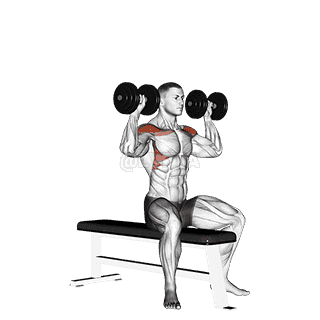
Performing the: A Step-by-Step Tutorial Dumbbell Seated Front Raise
- Keep your back straight and your chest up, then slowly lift the dumbbells straight in front of you, keeping your arms slightly bent at the elbows.
- Continue to raise the dumbbells until your arms are parallel to the floor or slightly higher.
- Pause for a moment at the top of the movement, then slowly lower the dumbbells back to the starting position.
- Repeat this movement for your desired number of repetitions, ensuring to maintain control and proper form throughout the exercise.
Tips for Performing Dumbbell Seated Front Raise
- Controlled Movement: Avoid swinging the dumbbells. This not only reduces the effectiveness of the exercise but can also lead to injury. Raise the dumbbells in a slow, controlled manner, pause for a moment when your arms are parallel to the floor, and then lower them slowly.
- Right Weight: Choose a weight that is challenging but allows you to maintain good form. Using a weight that is too heavy can cause you to use momentum rather than your muscles to lift the weight, which can lead to injury.
- Keep Your Elbows Slightly Bent: Do not lock your elbows when you raise the dumbbells. Keeping a slight bend in your elbows can help to prevent strain and injury.
- Focus on Your Shoulders: The main purpose
Can beginners do the Dumbbell Seated Front Raise?
Yes, beginners can do the Dumbbell Seated Front Raise exercise. However, it's important to start with a lighter weight to ensure proper form and avoid injury. It's also beneficial to have someone knowledgeable about weightlifting, such as a personal trainer, to guide a beginner through the correct form and technique.
What are common variations of the Dumbbell Seated Front Raise?
- Incline Bench Front Raise: This variation is performed while lying face down on an incline bench, which can help isolate the shoulder muscles more effectively.
- One-Arm Dumbbell Front Raise: This variation is performed by raising one dumbbell at a time, which can help improve balance and focus on individual shoulder strength.
- Dumbbell Front Raise with Twist: This variation is performed by twisting your wrists so your palms face the ceiling at the top of the movement, which can engage different parts of the shoulder muscles.
- Alternating Dumbbell Front Raise: This variation is performed by raising one dumbbell at a time in an alternating fashion, which allows for a continuous movement and can help maintain a steady heart rate.